
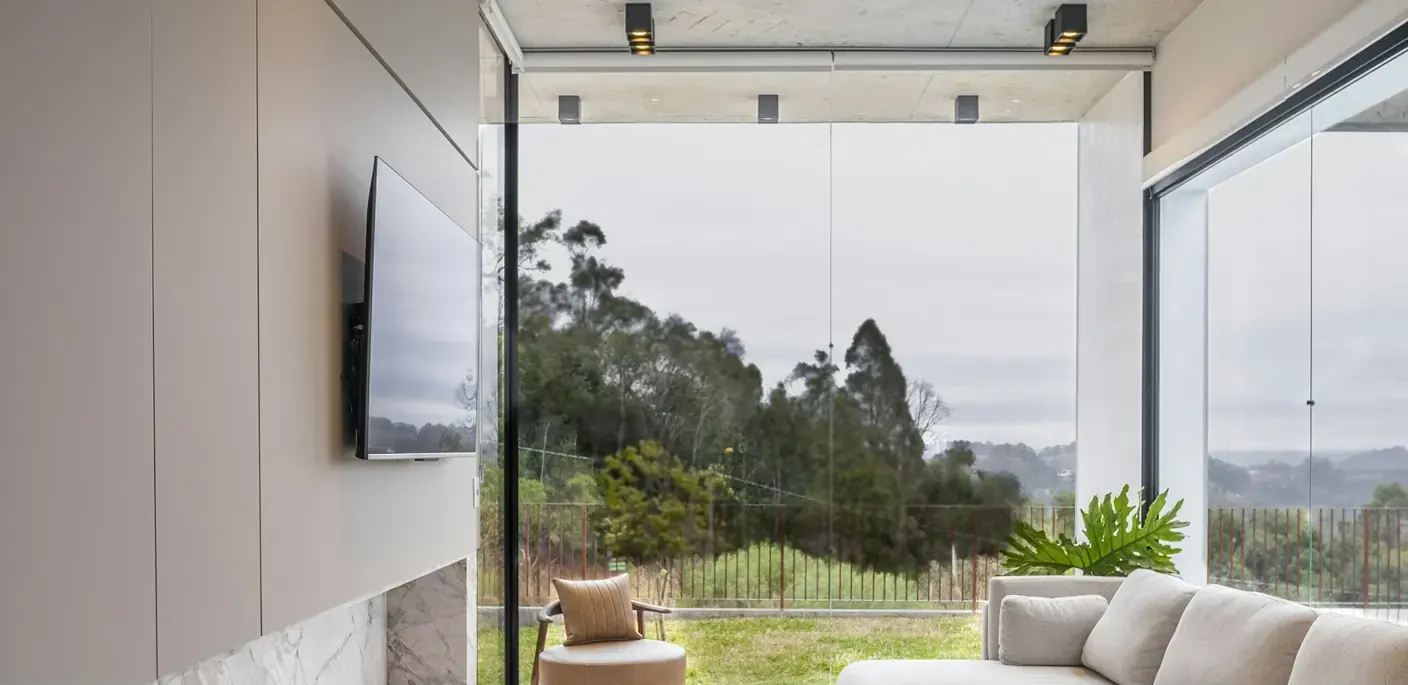
Naples and Collier County homes are built around the view. Floor-to-ceiling glass facing the Gulf, the golf course, or the lanai is the whole point, until the Florida sun turns that same glass into the biggest liability on your utility bill. Oversized west- and south-facing windows pour solar heat straight into the living space, forcing your HVAC system to work overtime just to hold a comfortable temperature. Most homeowners respond by closing the blinds by hand during the hottest part of the day, which solves the heat problem by giving up the view entirely. That trade-off isn't necessary. Properly designed Lutron motorized shading manages solar heat gain automatically, on a schedule tuned to your home's exact orientation, without asking you to choose between a cool house and a beautiful one.
Why SWFL Windows Work Against Your HVAC System
Glass is the least insulating material in any home's envelope, and large expanses of it, the kind that make a Naples waterfront or golf-course property worth owning, multiply the problem. Direct sun striking unshaded glass raises interior surface temperatures well above room temperature, and that radiant heat keeps loading the space long after the sun has moved. Air conditioning systems sized for a home's square footage often aren't accounting for how much of that square footage is glass facing due south or west. The result is a system that short-cycles, runs longer than it should, and still leaves certain rooms uncomfortably warm in the afternoon, while UV exposure quietly fades rugs, art, and furniture along the way.
How Lutron Shading Actually Reduces Cooling Load
A Lutron shading system doesn't wait for a homeowner to notice the room is hot. Shades are programmed to respond to the sun's actual path across your specific property, lowering on the exposures taking the worst solar load at the times of day it's happening, and retracting once the angle changes. That precision matters more than "closing the blinds" ever could, because it's tuned to your home's orientation, your roofline, and the specific windows doing the most damage, not a generic timer. Paired with Lutron's lighting control, the same system can dim artificial lighting as natural light shifts, so the home stays comfortable and energy-efficient without anyone touching a switch. For seasonal residents, this is especially valuable: shades can run their full heat-management schedule while the house sits empty, instead of baking all season behind open glass.
Keeping the View, Not Just Blocking the Sun
The goal was never to live behind closed shades. Lutron's shading fabrics range from solar screens and sheers that filter glare and UV while keeping sightlines intact, to blackout fabrics reserved for bedrooms and media rooms where full darkness matters. Many of our Naples clients run dual-shade setups, a sheer shade that stays down most of the day to cut heat and glare while preserving the water or golf-course view, with a blackout shade layered behind it for evenings or film nights. Each shade, or combination, is set on its own schedule and accessible from the same app controlling the rest of the home, so the view comes back automatically the moment the sun allows it.
Designed and Installed Right, Not a DIY Add-On
Motorized shading looks simple from the showroom floor and gets complicated fast once it meets a real house. Fabric selection, headrail and valance detailing, pocket or ceiling-recess integration, low-voltage wiring, and programming logic all have to be planned together, ideally before drywall closes, which is why this is a designed-and-installed service, not a gadget you add later. We see this most clearly on takeover projects: homes where a previous installer treated shades as a standalone purchase instead of part of the architecture, leaving exposed hardware, shades that fight the HVAC schedule instead of supporting it, or wiring that makes future service a guessing game. As an authorized Lutron dealer, our team designs the shade package into the home's architecture and electrical plan from day one, and programs it as part of the whole-home system, not bolted on as an afterthought.
One System, Working Together
The real payoff of Lutron shading is that it isn't a standalone product, it's one more input into the same whole-home system managing your lighting, climate, and security. A single "Away" scene can lower shades on the sun-exposed side of the house, adjust the thermostat, and switch off lighting the moment you lock up for the season. A "Morning" scene can raise shades gradually as the sun moves off the worst exposures, letting light back into the room without the heat spike. That's the difference between shading as an accessory and shading as infrastructure: it works quietly in the background, protecting your furnishings and your cooling bill, while the view stays exactly where you wanted it.
Curious what Lutron shading would look like on your home's actual sun exposure? See how BluRoo designs lighting and shading systems, or contact our team to schedule a design consultation.
Let's keep creating Smarter, Safer Spaces.